



Parasite
Antiparasitics are a class of medications which are indicated for the treatment of parasitic diseases such as nematodes, cestodes, trematodes, and infectious protozoa.
Parasite Isoform Specific Products
All Product Categories
-
Parasite Related Products (2499)
Related Products (2499)

-
Related Compound Screening Libraries (1)
-
Parasite Isoform Comparison
-
(+)-Cyclozonarone
 0 ImagesCat. No.: HY-184345CAS No.: 332858-46-5(+)-Cyclozonarone is a benzoquinone derivative found in brown algae Dictyopteris undulata, with activity against T. cruzi epimastigotes, Tulahuen strains. (+)-Cyclozonarone inhibits growth of cancer and endothelial cells, and exhibits anti-leishmanial activity. (+)-Cyclozonarone can be used for the research of lung carcinoma, colon carcinoma, prostate carcinoma.
-
Avermectin A2b
 0 ImagesCat. No.: HY-136897CAS No.: 65195-54-2Avermectin A2b is an avermectin. Avermectins are produced during the fermentation of the actinomycete Streptomyces avermitilis. Avermectins possess anthelmintic and insecticidal properties, and are commonly used as insecticides for the control of pests and parasitic worms.
-
DL-Methionine-d3
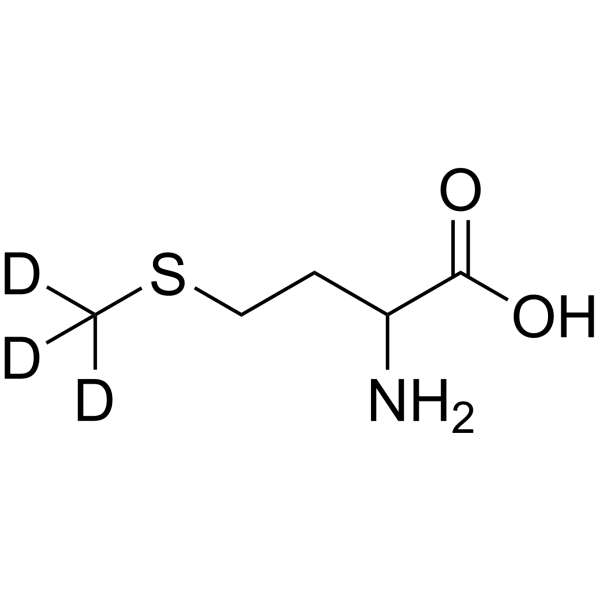 0 ImagesCat. No.: HY-N0325S3CAS No.: 284665-20-9DL-Methionine-d3 is the deuterium labeled DL-Methionine. DL-Methionine is an essential amino acid containing sulfur with oxidative stress defense effects. DL-Methionine can be used for animal natural feed. DL-Methionine also kills H. rostochiensis on potato plants.
-
Antiparasitic agent-18
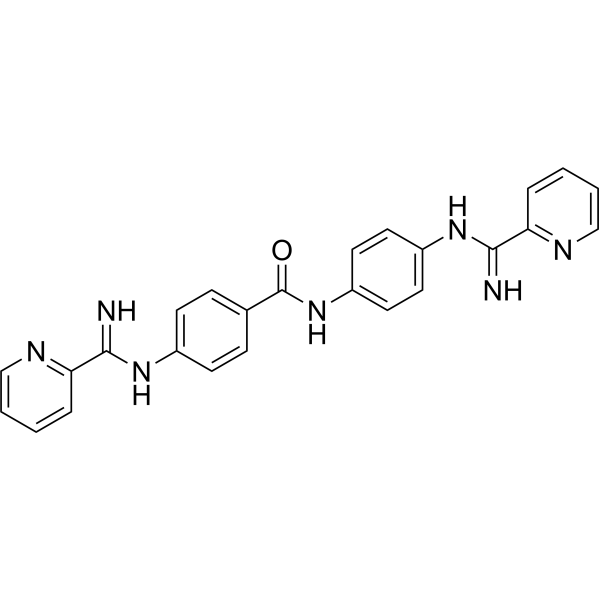 0 ImagesCat. No.: HY-155281CAS No.: 2821884-59-5Antiparasitic agent-18 (compound 3a) is active and selective against the T. brucei (EC50=0.4 μM), T. cruzi (EC50=0.21 μM), and L. donovani (EC50=0.26 μM). Antiparasitic agent-18 has potent antiprotozoal activity.
-
Ep vinyl quinidine
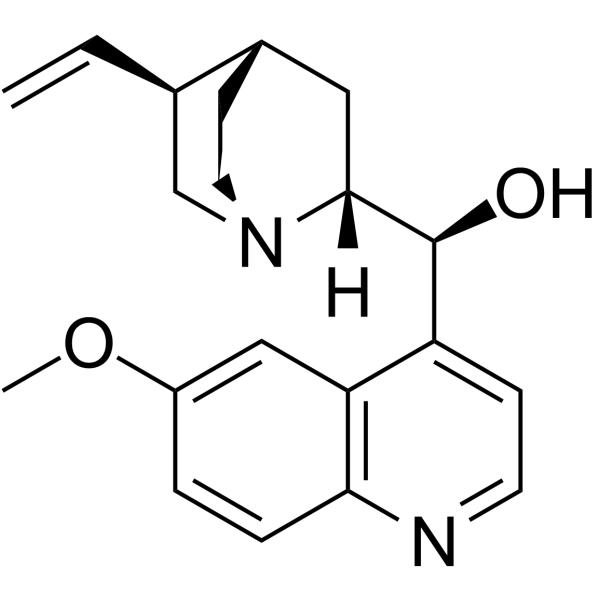 0 ImagesCat. No.: HY-114029CAS No.: 101143-87-7Synonyms: 3-Epiquinine; EpivinylquinidineEp vinyl quinidine (3-Epiquinine) is an epi-vinyl stereoisomer of Quinidine. Quinidine is an antiarrhythmic agent. Quinidine is a potent, orally active, selective cytochrome P450db inhibitor. Quinidine is also a K+ channel blocker with an IC50 of 19.9 μM. Quinidine can be used for malaria research.
-
Halictine 2
 0 ImagesCat. No.: HY-P11155CAS No.: 1260654-69-0Halictine 2 is an antimicrobial peptide. Halictine 2 exhibits promising anti-parasitic activity against Leishmania spp., targeting both the extracellular infective metacyclic promastigotes and intracellular amastigotes. Halictine 2 can be used for the study of leishmaniases.
-
Artemisinin-13C,d4
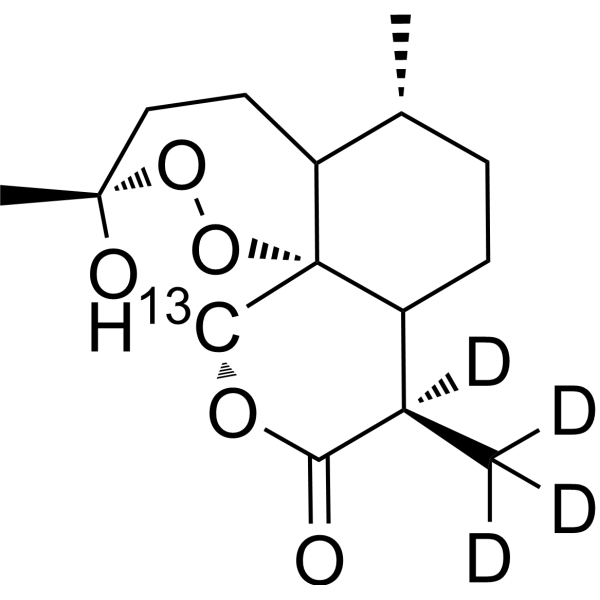 0 ImagesCat. No.: HY-B0094S3Synonyms: Qinghaosu-13C,d4; NSC 369397-13C,d4Artemisinin-13C,d4 is 13C and deuterated labeled Artemisinin (HY-B0094). Artemisinin (Qinghaosu), a sesquiterpene lactone, is an anti-malarial agent isolated from the aerial parts of Artemisia annua L. plants. Artemisinin inhibits AKT signaling pathway by decreasing pAKT in a dose-dependent manner. Artemisinin reduces cancer cell proliferation, migration, invasion, tumorigenesis and metastasis and has neuroprotective effects.
-
Filixic acid ABA
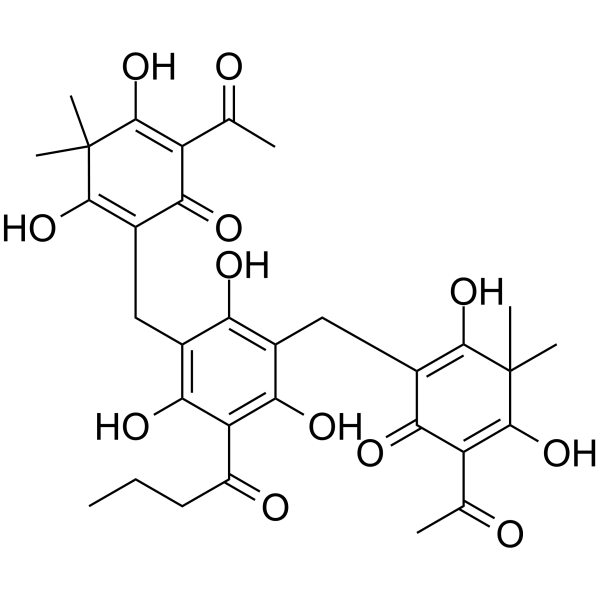 0 ImagesCat. No.: HY-N0531CAS No.: 38226-84-5Filixic acid ABA is a molluscicidal agent against B. peregrina adult snails, with an LD50 of 8.40 ppm. Filixic acid ABA shows 100% mortality of B. peregrina at 15 ppm.
-
(3S,5S)-[6]-Gingerdiol
![(3S,5S)-[6]-Gingerdiol](https://file.medchemexpress.com/product_pic/hy-n16612.gif "Click to View (3S,5S)-[6]-Gingerdiol Product Detail") 0 ImagesCat. No.: HY-N16612CAS No.: 143615-76-3(3S,5S)-[6]-Gingerdiol is a cestocidal agent. (3S,5S)-[6]-Gingerdiol can be isolate from the roots of ginger. (3S,5S)-[6]-Gingerdiol shows cestocidal activity against H. nana.
0 ImagesCat. No.: HY-N16612CAS No.: 143615-76-3(3S,5S)-[6]-Gingerdiol is a cestocidal agent. (3S,5S)-[6]-Gingerdiol can be isolate from the roots of ginger. (3S,5S)-[6]-Gingerdiol shows cestocidal activity against H. nana.
-
DNDI-VL-2098
 0 ImagesCat. No.: HY-W663179CAS No.: 681492-17-1DNDI-VL-2098 is an orally active antileishmanial agent. DNDI-VL-2098 exhibits high permeability, in vitro metabolic stability, and selective inhibition of CYP2C19 (IC50=0.47 μM). DNDI-VL-2098 does not affect the activities of other major CYP enzymes (CYP1A2, CYP2C9, CYP2D6 and CYP3A4) at concentrations up to 12.5 μM. It shows favorable pharmacokinetic properties in multiple animal models including mice, hamsters, rats and dogs. DNDI-VL-2098 is characterized by moderate to high plasma protein binding and can be used for the research of visceral leishmaniasis.
-
2,3-Diphosphoglyceric acid-13C3
 0 ImagesCat. No.: HY-W751808SCAS No.: 2726226-14-6Synonyms: 2,3-DPG-13C32,3-Diphosphoglyceric acid-13C3 is the 13C-labeled 2,3-Diphosphoglyceric acid (HY-113050). 2,3-Diphosphoglyceric acid (2,3-DPG) is an intermediate of the glycolytic pathway. 2,3-Diphosphoglyceric acid stabilizes the deoxygenated form of hemoglobin by allosteric binding and facilitates oxygen release at tissue sites. 2, 3-diphosphoglyceric acid has antiparasitic activity. 2,3-Diphosphoglyceric acid can be used in the study of Alzheimer's disease (AD).
-
Carbendazim hydrochloride
 0 ImagesCat. No.: HY-13582ACAS No.: 37574-18-8Carbendazim hydrochloride is a potent and orally active broad-spectrum?benzimidazole fungicide and can be acts as a pesticide for fungal diseases research, such as Seproria,?Fusarium?and?Sclerotina. Carbendazim hydrochloride is a benzimidazole (HY-Y1825) derivative with antitumor activity and used for cancer research, especially advanced solid tumors and lymphoma.
-
DS-103
 0 ImagesCat. No.: HY-173064DS-103 is an inhibitor for HDAC that inhibits HDAC1, HDAC2, HDAC3, HDAC6 and HDAC8 with IC50s of 0.029, 0.123, 0.022, 0.367 and 9.26 μM, respectively. DS-103 inhibits Plasmodium falciparum 3D7 with IC50 of 5.08 μM. DS-103 exhibits cytotoxicity in cells A2780 and Cal27 with IC50 of 1.48 μM and 1.47 μM, reverses Cisplatin (HY-17394) resistance in A2780 and Cal27 with IC50 of 4.62 μM and 2.23 μM. DS-103 exhibits synergistic effect with Cisplatin (HY-17394), enhances Cisplatin-induced apoptosis.
-
Anti-Trypanosoma cruzi agent-2
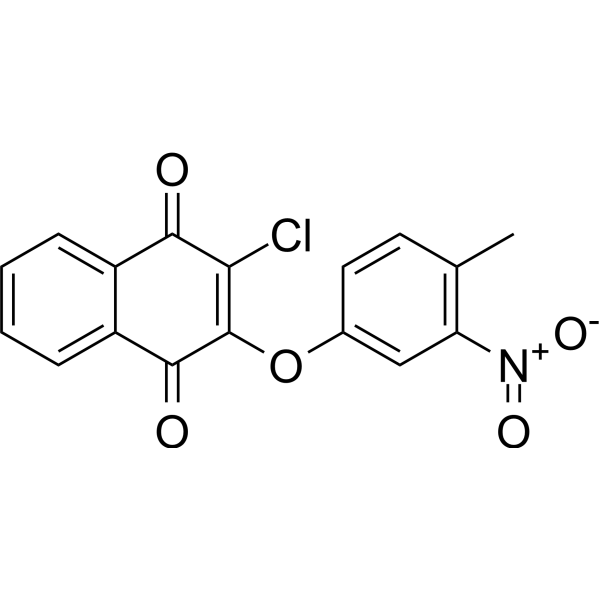 0 ImagesCat. No.: HY-115972CAS No.: 2863602-85-9Anti-Trypanosoma cruzi agent-1 (Compd 3b), selective compound against NINOA trypomastigote (IC50 = 0.51 µM) and INC-5 epimastigote form (IC50 = 3.06 µM), posseses anti-T. gondii activity.
-
Endoxifen hydrochloride (Standard)
 0 ImagesEndoxifen (hydrochloride) (Standard) is the analytical standard of Endoxifen (hydrochloride). This product is intended for research and analytical applications. Endoxifen hydrochloride is a key active metabolite of Tamoxifen (TAM) with higher affinity and specificity to estrogen receptor that also inhibits aromatase activity. Endoxifen hydrochloride has the potential for breast cancer study[1][2].
-
Insecticidal agent 24
 0 ImagesCat. No.: HY-172953Insecticidal agent 24 is an orally active pyridylspiroindoline frontrunner. Insecticidal agent 24 has antiplasmodial activity (Pf NF54 IC50: 0.08 μM). Insecticidal agent 24 inhibits hERG activity (IC50: 6.5 μM). Insecticidal agent 24 reduces parasitemia in a humanized immunodeficient NSG mouse Plasmodium falciparum infection model.
-
Albendazole sulfone-d7
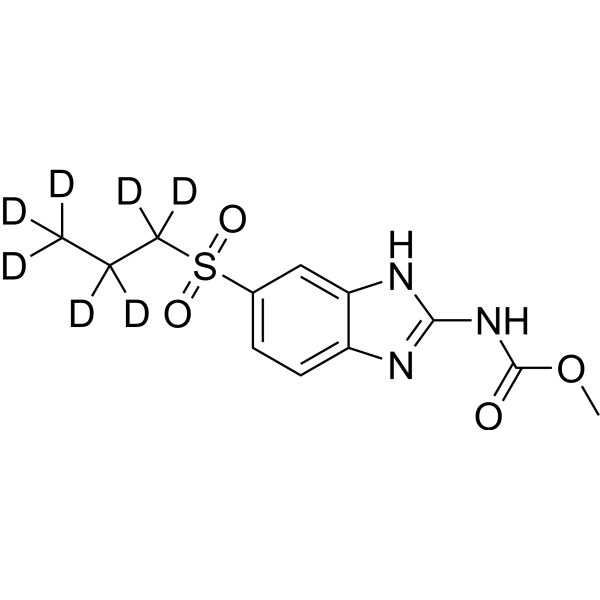 0 ImagesCat. No.: HY-W019773SAlbendazole sulfone-d7 is the deuterium labeled Albendazole sulfone. Albendazole sulfone is a metabolite of Albendazole, and exhibits anti-parasite effect against Echinococcus multilocularis Metacestodes.
-
Walnut leave extract
 0 ImagesCat. No.: HY-N20521Walnut leave extract is an extract from the leaves of walnut (Juglans) that has antibacterial and antiparasitic properties.
-
Antileishmanial agent-1
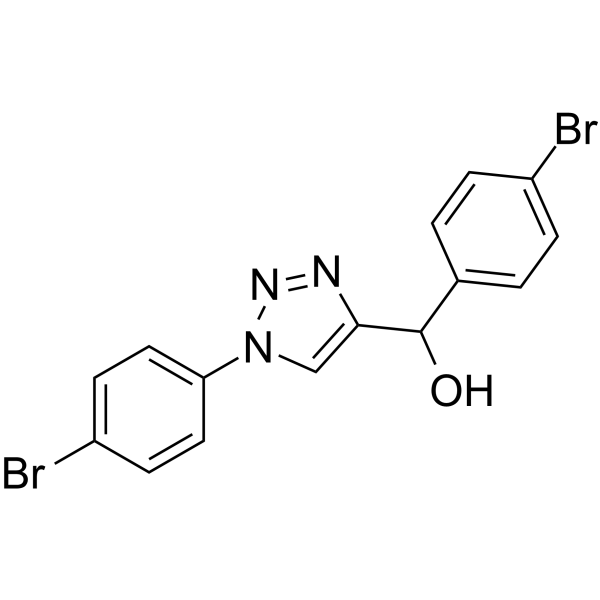 0 ImagesCat. No.: HY-115725CAS No.: 2454115-43-4Antileishmanial agent-1 exhibits the activity against L. amazonensis promastigotes (IC50 = 15.52 μM) and intracellular amastigotes (IC50 = 4.10 μM).
-
Dihydropinosylvin monomethyl ether
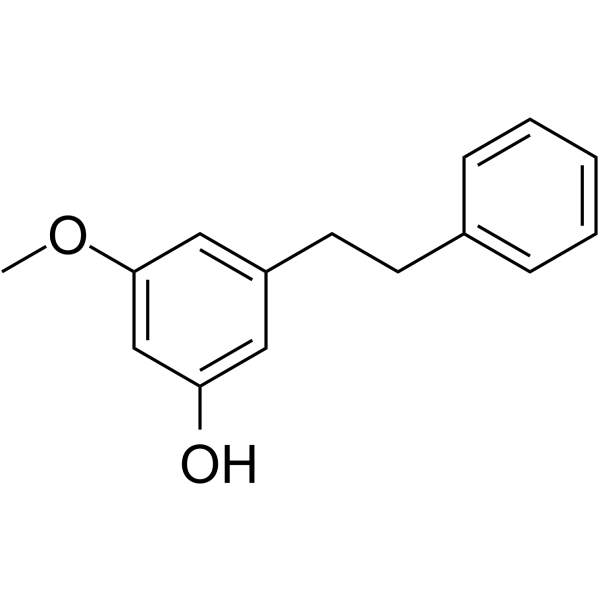 0 ImagesCat. No.: HY-N3754CAS No.: 17635-59-5Dihydropinosylvin monomethyl ether is a natrual compound with nematicidal activity. Dihydropinosylvin monomethyl ether can inhibit pine wood nematodes infection.



